


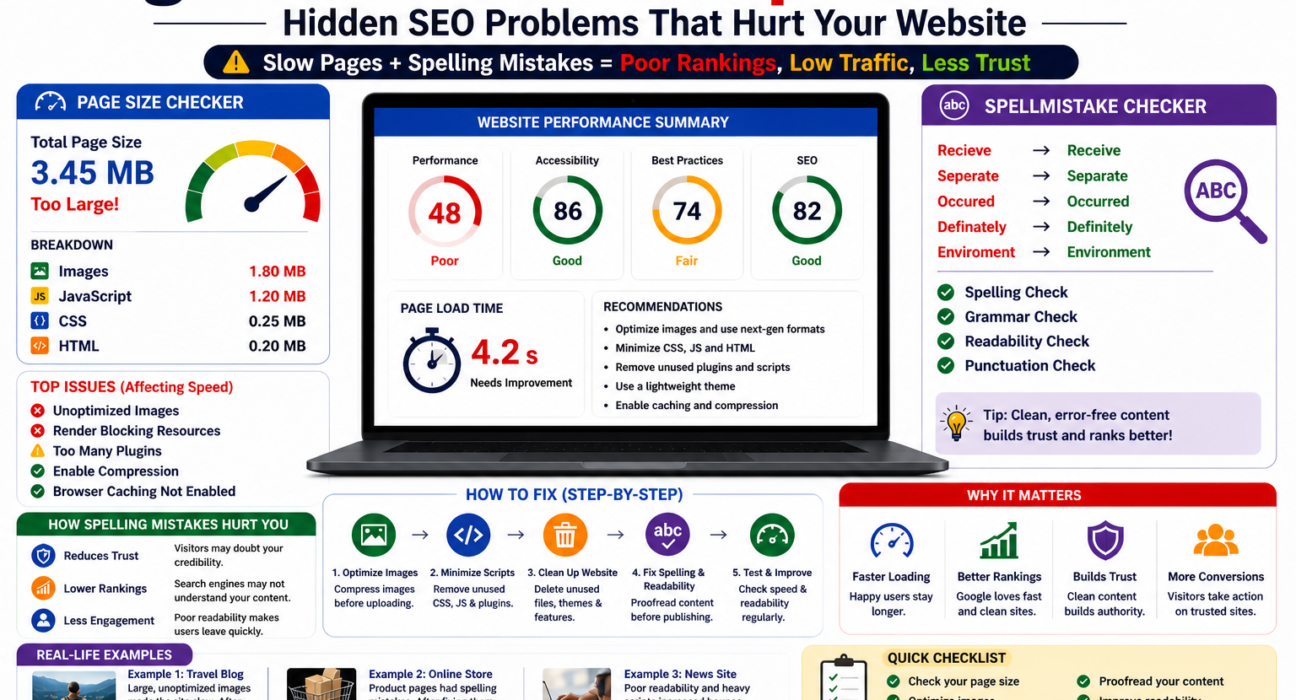
Anyone who spends time managing websites, writing content, or working with digital documents eventually runs into small tools that make big differences. One such tool is often searched under the term Page Size Checker SpellMistake, a phrase that combines two very practical ideas: checking the size of a web page and catching spelling errors before they go live. In this article, we will explore what this term really means, why people search for it, how such tools work, and why paying attention to both page size and spelling accuracy matters more than most people realize.
What Does Page Size Checker SpellMistake Actually Mean
The phrase Page Size Checker SpellMistake is a bit unusual because it merges two separate but related concepts. A page size checker is a tool that measures how large a web page is in terms of file size, usually in kilobytes or megabytes. A spell mistake, on the other hand, refers to an error in spelling that appears within written content. When people type Page Size Checker SpellMistake into a search bar, they are often looking for a tool that can do both jobs at once, or they are trying to find information that connects page performance with content accuracy.
It is also common for search terms like Page Size Checker SpellMistake to appear because someone misspelled a related query while typing quickly. Search engines are surprisingly good at understanding intent even when the exact wording is slightly off. This is one reason the phrase has become a recognizable search pattern among people looking for website auditing tools.
Why Page Size Matters for Websites
Before diving deeper into the spelling side of things, it helps to understand why page size checking is such a valuable practice. Every webpage is made up of code, images, scripts, and other files that all add up to a total size. A larger page size usually means slower loading times, especially for users on mobile data or slower internet connections.
Search engines also pay attention to page size indirectly, because loading speed is a known ranking factor. A tool built around the idea of Page Size Checker SpellMistake would ideally scan a webpage, calculate its total size, and flag anything that seems unusually heavy, such as oversized images or bloated scripts. This kind of technical check is something website owners often overlook until their traffic starts dropping.
The Hidden Cost of Spelling Errors
On the other side of the equation, spelling mistakes carry their own kind of cost. A single typo might seem harmless, but consistent spelling errors across a website can damage credibility. Visitors often associate careless writing with careless business practices, even if that is not true. This is exactly why the concept behind Page Size Checker SpellMistake resonates with so many content creators who want both technical performance and written accuracy in one place.
Spelling mistakes can also affect search visibility. If a keyword is misspelled throughout a page, search engines may struggle to match that content with the correct search queries. This is another layer of why tools combining page auditing and spelling checks, similar in spirit to Page Size Checker SpellMistake, are gaining attention among bloggers, marketers, and small business owners.
How a Combined Tool Would Work in Practice
Imagine a tool designed specifically around the idea of Page Size Checker SpellMistake. The first function would scan the HTML, CSS, JavaScript, and media files of a page to calculate the overall size. It would then present this information in a simple report, showing which elements contribute the most weight.
The second function would run a spelling check across the visible text content of the page. Instead of just underlining errors like a basic word processor, a well-designed Page Size Checker SpellMistake tool would highlight the exact location of each mistake within the page structure, making it easy for the website owner to locate and fix the issue quickly.
Together, these two functions create a workflow that many people find genuinely useful. Instead of switching between a performance testing tool and a separate grammar checker, everything happens in one place.
Who Actually Needs This Kind of Tool
Not everyone needs to worry about page size and spelling accuracy at the same level. Large publishing websites, e-commerce stores, and content-heavy blogs benefit the most from something like Page Size Checker SpellMistake because they publish frequently and cannot afford to manually review every single page.
Freelance writers and small business owners also find value in this concept, even if they are not using a dedicated tool. Simply understanding the two ideas behind Page Size Checker SpellMistake, meaning fast-loading pages and clean writing, can guide someone toward better habits without needing complex software.
Developers, too, often run into this kind of search when they are troubleshooting a client’s website. A page that loads slowly and contains obvious typos gives a poor first impression, and fixing both issues at once saves time.
Common Reasons Pages Become Too Large
There are several typical culprits behind bloated web pages. Uncompressed images are usually the biggest offender, followed by unnecessary plugins, excessive fonts, and unminified code. When someone runs a check similar to Page Size Checker SpellMistake, these are usually the first areas flagged for improvement.
Another overlooked factor is redundant code left behind from old website updates. Over time, websites accumulate leftover scripts and styles that no longer serve a purpose but still add to the total file size. A thorough Page Size Checker SpellMistake style audit would catch these lingering issues and suggest cleanup.
Common Reasons Spelling Errors Slip Through
Spelling mistakes often happen not because someone does not know how to spell, but because of simple human oversight during fast content creation. Writers under deadline pressure, non-native EnPerformance metricsglish speakers, or teams publishing large volumes of content are especially prone to these slips.
Autocorrect features can sometimes make things worse by changing a correctly spelled word into an incorrect one without the writer noticing. This is another reason the combined approach suggested by Page Size Checker SpellMistake makes sense, since automated tools catch what tired human eyes might miss.
The Connection Between Technical SEO and Content Quality
Search engine optimization is often divided into two broad categories: technical SEO and content SEO. Page size falls under technical SEO because it affects site speed and crawlability. Spelling accuracy falls under content SEO because it affects readability and trustworthiness.
The reason this particular phrase has gained traction is that it naturally bridges these two categories. Most SEO advice treats them separately, but in reality, a website’s success depends on both working well together. A fast page filled with spelling errors will still frustrate readers, and a beautifully written page that loads slowly will still lose visitors before they even finish reading the first sentence.
Practical Steps to Improve Both Areas
Improving page size does not require advanced technical skills. Compressing images before uploading them, removing unused plugins, and choosing a lightweight website theme are all simple steps that make a noticeable difference. Anyone applying the principles behind Page Size Checker SpellMistake can start with these basic actions before moving on to more advanced optimization.
For spelling accuracy, reading content aloud before publishing is a surprisingly effective method. Using a dedicated proofreading tool alongside a page size check, in the spirit of Page Size Checker SpellMistake, adds another layer of protection against embarrassing mistakes slipping through to the final published version.
Mistakes People Make When Auditing Their Own Pages
One common mistake is checking page size only once, right after launching a website, and never again. Websites change constantly, with new images and plugins added over time, so a single check is not enough. The idea works best as an ongoing habit rather than a one-time task.
Another mistake is relying entirely on automated spelling checkers without a manual review. Automated tools are helpful, but they sometimes miss context-specific errors, such as using the wrong version of a correctly spelled word. Combining automated and manual review remains the most reliable approach, even within a streamlined process like Page Size Checker SpellMistake.
How This Concept Fits Into Everyday Website Maintenance
Website maintenance is not just about fixing broken links or updating software. It also includes monitoring performance metrics and reviewing published content for accuracy. When maintenance routines include something similar to Page Size Checker SpellMistake, website owners tend to catch small problems before they grow into bigger ones.
Regularly scheduled checks, whether weekly or monthly, help maintain consistency. Treating this practice as part of a broader maintenance checklist rather than an occasional afterthought leads to more stable and trustworthy websites over time.
Why This Search Term Continues to Grow in Popularity
As more people build websites without formal technical training, tools and concepts that simplify complex tasks become increasingly popular. Page Size Checker SpellMistake represents exactly this kind of simplification, taking two important but often separate concerns and presenting them as one manageable idea.
This growing interest also reflects a broader shift toward user experience as a priority. Search engines and readers alike now expect pages to load quickly and read smoothly, without typos disrupting the flow. The continued relevance of this search term shows that people are actively looking for ways to meet these expectations without overcomplicating their workflow.
Final Thoughts on Page Size Checker SpellMistake
Understanding Page Size Checker SpellMistake ultimately comes down to recognizing that website quality is not just about one factor. Speed matters, but so does the accuracy of the words on the page. By paying attention to both, content creators and website owners give their audience a better overall experience, one that feels fast, professional, and carefully put together.
Whether someone is searching for an actual tool or simply trying to understand the concept, the core lesson behind Page Size Checker SpellMistake remains the same: small technical and editorial details add up to a much stronger website in the long run.
Stay informed with the latest updates on Lidnews.
Frequently Asked Questions
What is the main idea behind Page Size Checker SpellMistake? It refers to the combined practice of checking how large a webpage is in file size while also reviewing the page for spelling errors, ensuring both performance and content quality are addressed together.
Does page size really affect how fast a website loads? Yes, larger pages generally take longer to load, especially on slower internet connections, which is why size checking is considered an important technical step.
Can spelling mistakes actually hurt search rankings? While spelling alone is not a major ranking factor, it can affect how well search engines match content to search queries and can reduce reader trust, indirectly impacting performance.
Is there a single dedicated tool that performs both checks? Many people search for this exact combination, but most existing tools handle page size and spelling separately, which is part of why the idea remains popular as a search topic.
How often should someone check their page size? Ideally, page size should be reviewed every time significant content or media is added, and at minimum on a monthly basis for actively updated websites.
What causes most pages to become too large over time? Uncompressed images, outdated plugins, unnecessary scripts, and leftover code from old updates are the most common causes of increased page size.
Are automated spelling checkers reliable enough on their own? They are helpful but not perfect, since they can miss context-based errors, so combining them with manual proofreading gives the best results.
Does this concept apply to blogs as well as business websites? Yes, any website that publishes content regularly can benefit from paying attention to both page size and spelling accuracy.
What is the easiest first step to reduce page size? Compressing and properly sizing images before uploading them is usually the simplest and most effective first step.
Why do people misspell or combine search terms like this? Search behavior is often quick and informal, so users sometimes combine related concerns into a single search phrase, even if it does not match an exact existing tool name.
Is it necessary to fix spelling errors immediately after finding them? It is best practice to fix them as soon as possible, since visible errors can affect how visitors perceive the credibility of the content.
Can improving both page size and spelling accuracy really improve user experience? Yes, faster loading combined with clean, error-free writing creates a smoother and more trustworthy experience for anyone visiting the page.